
Every self-drive guide tells you to avoid driving after dark. Fewer explain why the rule exists, what the actual curfews are country by country, or what happens if you’re caught out past them. Here’s the real picture.
Why the rule exists it’s not just bureaucracy
Wildlife authorities across the region give roughly the same three reasons for restricting night driving, and they’re worth understanding rather than just following blindly:
- Collision risk. Animal activity and the chance of a vehicle striking wildlife are highest at night, early morning, and dusk visibility drops just as movement picks up.
- Anti-poaching control. Restricting vehicle movement after dark makes it far easier for rangers to distinguish a tourist vehicle from a poacher’s.
- Animal welfare. Many nocturnal species only move freely once headlights and engine noise disappear for the night; unrestricted night traffic disrupts that window.
Uganda: 7:00pm–7:00am, with real fines attached
The Uganda Wildlife Authority prohibits vehicle movement in the parks between 7:00pm and 7:00am. This isn’t a soft guideline UWA enforces it alongside a broader rule set covering speed (40 km/h max) and off-track driving, with published fines for violations. A road-kill incident specifically carries a fine of USD 500 per animal, on top of speeding and off-track penalties. A small number of parks offer authorized night game drives, but only under official guides self-driving after the curfew is not an option UWA leaves open.
Kenya: gate-to-gate, no exceptions in the public parks
Kenya Wildlife Service enforces a strict gate-to-gate rule across the national parks no vehicle movement roughly between 6:30pm and 6:00am, with parks going dark at dusk and vehicles required out. The Masai Mara National Reserve, though managed separately by the Narok County Government rather than KWS, follows the same practice. Where Kenya differs from Uganda and Tanzania is in its private conservancies: land adjacent to the Mara and other reserves operates under separate management, and several of these conservancies run legitimate, guided night game drives with spotlights something the public parks don’t permit at all. If night wildlife viewing is a priority, a conservancy stay rather than the public reserve is the way to get it, and only with a guide.
Tanzania: the same public-park curfew, no self-drive night exception
Tanzania follows the same broad pattern as its neighbors: major public parks like the Serengeti enforce a sunset curfew, with all vehicles required back at camp and both self-driving and guided night drives strictly prohibited inside the park boundary itself. As with Kenya, the exception lives outside the public park system some private concessions bordering major parks do offer guided night drives, but that’s a different product entirely from a self-drive rental.
The pattern across all three is consistent: public national parks close the road network at dusk, full stop, and the only legal way to be out after dark is a guided night drive in a private conservancy or concession outside the main park boundary. Nowhere in the region can you legally self-drive at night inside a public park.
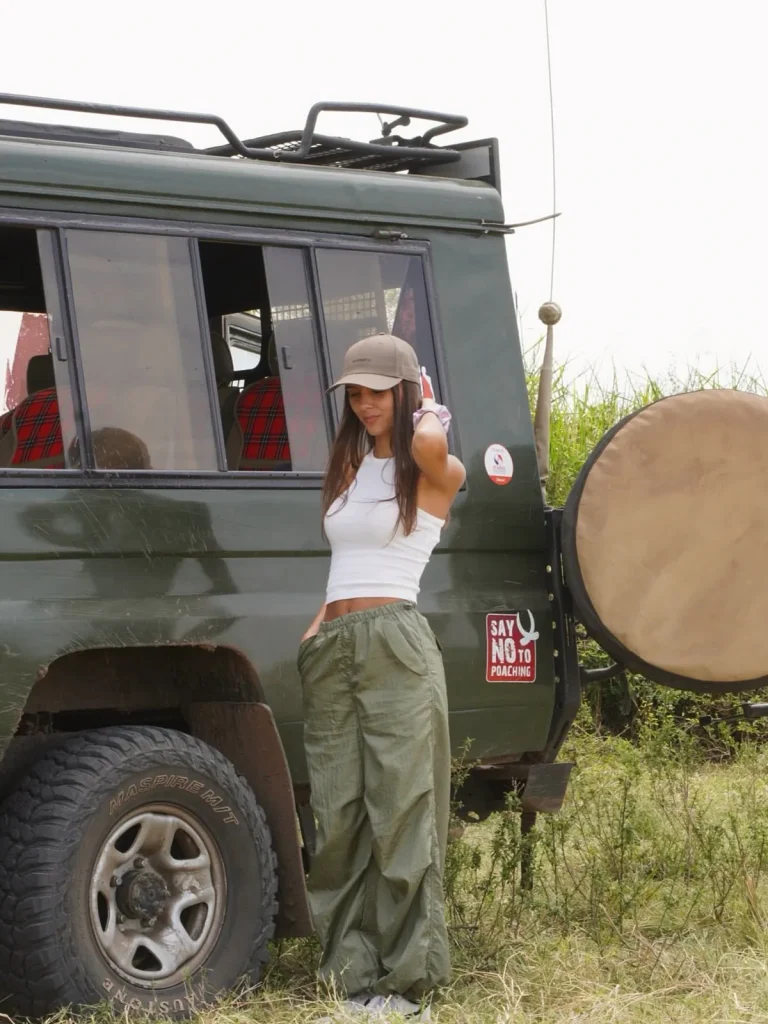
Collision risk beyond the parks the roads you don’t think about
The curfews cover inside park boundaries, but wildlife-vehicle risk doesn’t stop at the gate. Roads passing near or between parks especially in Uganda’s north, rural stretches of Kenya, and areas bordering Tanzania’s reserves can see wildlife crossing well outside official park limits, particularly around dusk. General advice across the region is consistent: avoid driving after dark outside towns wherever possible, not just inside parks, given poor visibility and the general accident risk on unlit rural roads.
What this means for planning your route
- Build your driving schedule around gate hours, not just distance. A route that looks fine on a map can leave you racing a 6:30pm or 7:00pm curfew if you underestimate road conditions.
- If night wildlife viewing matters to you, plan for it specifically a conservancy stay in Kenya, or a private concession in Tanzania, rather than assuming you can extend a self-drive day into dusk.
- Treat the curfew as a safety rule, not a formality. The reasoning collision risk, visibility, nocturnal wildlife behavior applies whether or not a ranger happens to be watching.
- Outside the parks, the same caution applies on rural roads generally, especially in the hour around dusk when animal movement and low light overlap.
The honest bottom line: these curfews aren’t arbitrary red tape they map directly onto when collision risk is highest. Plan your driving day to be well inside the gate before the light starts to go, and if after-dark wildlife viewing is something you want, build a guided night drive into your itinerary rather than trying to stretch a self-drive day past the rules.